
Plenary Speaker

Prof. Mahmoud Shafik
BEng (Hons) MSc MPhil PhD CEng FHEA MIET MASME MCOMEH
CTO of GIES Innovation Ltd, UK
University of Hertfordshire, UK
Professor Mahmoud Shafik is a well-known expert in Digital Innovation in Engineering with over 20 years of industrial applied research experience. His expertise spans various fields, including, Intelligent Systems and Digital Technology, Innovation for Sustainable Engineering, Industry 4.0, Artificial Intelligence (AI) and Industrial Automation, Robotic Systems, Autonomous Systems, Internet of Everything (IoE), Intelligent Traffic and Transportation Systems, Fly, Drive and Steer-by-wire, 3D Smart Sensors and Actuators, Machine Vision, Cancer Treatment using CVD Diamond Radio Therapy Technology, Information Technology for Blind and Visually Impaired people, Electro-Rheological Fluid Micro Actuators Technology, AD-HOC Wireless Technology, Assisted Living Technology, Chronic Diseases ICT Technological Solutions, Telehealth, Telecare, Climate Change, and Software Tools. Shafik has also a number of patents in these areas of industrial applied research and sustainable technology.
Shafik has been leading several industrial applied research projects from European Commission, Innovate UK and UK Research Councils, of a budget of several millions of euros and have made an international technical, economic and social impact in his area of expertise. His research work has brought many groundbreaking outcomes that have been commercially explored by several Small to Medium (SME’s) and large enterprise (LE’s) organisations. This includes and not limited to: Intersurgical Ltd – UK, Veslatec Oy – Finland, Semelab plc. – UK, PTW Freiburg – Germany, Neotek – France, Kirchmayer Handel & Consulting GmbH – Austria, Spectrum Telecom Installations Ltd – Ireland, Diamond Materials GmbH – Germany, Fireworks International Ltd – UK, Pirotecnia Oscense SA – Spain, Total Motion Systems Ltd –UK, Micromech Limited – UK, Smart Technology Ltd – UK, Audi -Germany, Ford – UK, Schlumberger – France, Nissan – Japan and Rolls Royce - UK.
Shafik is the co-founder of Institute of Innovation in Sustainable Engineering (IISE) - https://www.derby.ac.uk/colleges/science-engineering/iise/, founder of International Journal of Robotics and Mechatronics - http://ojs.unsysdigital.com/index.php/ijrm, Editor-In-Chief of both Journal of Traffic and Logistics - http://www.jtle.net/ and International Journal of Mechatronics Engineering - https://www.svedbergopen.com/journals/ijme/about-the-journal/. He is serving as a chairman and plenary speaker of: International Conference on Intelligent Traffic and Transportation (ICITT) - http://www.icitt.org/, International Conference in Automation and Mechatronics Engineering - https://www.icame.org/, International Conference in Communication and Network Technology - http://www.iccnt.org/index.html, and Co-general Chair of International Conference Mechanical Engineering and Robotics Research - http://www.icmerr.com/index.html.
Shafik has joined the University of Hertfordshire in September 2025. He is CEO of GIES Innovation Ltd and formal senior lead academic and MSc course director of MSc in Mechatronics University of Derby - http://www.derby.ac.uk/. He has been supervising and external examiners for several PhD, and MSc research programmes across worldwide. He is a visiting professor, industrial and curriculum consultant for a few organisations in EU, Japan, China, and Middle East. He is also a committee member of The Consortium of UK University Manufacturing and Engineering (COMEH) for the Engineering Professorial Council - https://epc.ac.uk/network/communities/comeh/ and is serving as an Assessor and Knowledge Transfer Expert for the UK Knowledge Transfer Network, UKRC, Innovate-UK and EC Research Programmes.
For more information of Professor Shafik profile, career, achievements and selected publications please visit: https://www.linkedin.com/pub/mahmoud-shafik-ph-d/7/237/60 & ORCID: Mahmoud Shafik (PhD) BEng MSc PhD FHEA MIET MASME, Intelligent Systems and Digital Technology (0000-0001-8296-5698) - ORCID & https://www.researchgate.net/profile/Mahmoud_Shafik.
Title: Industry 4.0 and beyond: Towards Connected World, Autonomous, and Self-learning Machinery, is Imitation Learning the Future of our Industry?!
Artificial Intelligence, robotics, and industrial automation are developing rapidly. As they are one of the greatest approaches to enhance and strengthen human potentials, increase productivity and are moving from simple reasoning towards human-like cognitive abilities. This confirms the urgent need to adopt robotic cells and smart factories to enrich future digital manufacturing facilities to tackle the enormous challenges facing the UK, EU, and worldwide industry to move to green technology. Smart factories are key platform for recent industry 4.0 and beyond revolution and industrial robotic systems are integral measure of its cells configuration and reconfiguration performance. As it can reduce working time, providing less human error when performing high precision processes and in some applications help with decision marking. It is also one of the brightest approaches to meet flexible, programmable, and fixed industrial automation requirements. Since its flexible software platform can usually modified and optimised easily to meet the end-user particular provisions and demands. This makes it an economical, portable, and low-maintenance solution for many industrial applications, where there is a need to manufacture variety of products and parts, specific classes of product changes and fixed sequences of processing or assembly, services, and support. However, there are significant gaps between what the current industrial robotic systems are offering and industrialist expectations. Applied research programmes are certainly playing major rules in this exciting area, there are several ongoing research initiatives these include, Self-Learning Machinery using AI and Imitation Learning, Deep and Cognitive Learning, Internet of Things (IoT) and High Interconnection Devices, Internet of Everything (IoE) and Dynamic Configuration and Reconfiguration, Mass Information and Deep Integration, Data Handling and Security …etc. This talk will highlight Mechatronics Engineering past and present: towards connected world and present some snap shots of the ongoing applied research programmes that offer real platforms solution to some of the above world challenges.
Keynote Speaker

Prof. Teresa Zielinska
Warsaw University of Technology, Poland
Prof. Teresa Zielinska is Full professor of technical sciences. Deputy director for research at the Institute of Aeronautics and Applied Mechanics of the Warsaw University of Technology (WUT) and Rector’s Proxy of WUT for internationalization and doctoral education. Member of the Control and Robotics Committee of the Polish Academy of Sciences, Vice-President of the Polish Section of Robotics and Automation IEEE (2016-2019) and Secretary General of the International Federation for the Promotion of Mechanism and Machine Science (IFToMM) (2011-2019). Local coordinator of the Japan-Europe Master of Advanced Robotics (JEMARO), member of the Experts Team of the Ministry of Science and Higher Education (2017-2018), member of the Council of the National Science Center (2019-2022). She conducted research at several international universities, e.g. Polytechnic University of Turin (grant from the Italian Ministry of Education), Loughborough University of Technology (UK, grant from the Science and Engineering Research Council), Nanyang Technological University (Singapore) - senior research fellow. Visiting professor at: National University of Singapore, Nanyang Technological University (Singapore), Griffith University (Australia), Keio University (Japan), Shanghai Jiaotong University (China), Tianjin University of Technology (China). She is the co-holder of 2 national patents and the author or co-author of over 300 publications. Teresa Zielińska received the award of the Minister of Higher Education (Poland) for her scientific monograph, the Gold Cross of Merit and the Medal of the National Education Commission, as well as many university awards for her scientific activity. She graduated from the Faculty of Electronics of the Warsaw University of Technology, specializing in control, received her doctorate in robotics, and obtained her habilitation at the Institute of Biocybernetics of the Polish Academy of Sciences. Her research interests concern robotics, in particular biorobotics. Teresa Zielinska deals with the design and implementation of real-time control systems, motion synthesis and the design of novel robotic systems inspired by biology. She designed a prototype of a shear force sensor, developed and implemented a model of a biological Central Pattern Generator to generate motion for a humanoid robot, implemented a control system for an autonomous team of biologically inspired autonomous walking machines. Currently, her research interests focus on predicting human movement and actions. She is a laureate of the 1000 Talents Experts Program of Tianjin Municipality. She serves as Vice President of HERITAGE Network (Europe-India, is a member of the advisory board of Chist-Era and coordinates of academic cooperation between WUT - NTU and NUS (Singapore).
Title: Embodied Mechatronic Intelligence: From Physics-Based Modelling to Intelligent Motion and Control
This keynote presentation explores the integration of embodied mechatronic intelligence in robotic systems, focusing on the connection between mechanical design, motion generation, and intelligent control. We discuss how our studies on mechanical systems—specifically walking machines, humanoids, and mobile robotic support systems—were prototyped through careful design and intelligent algorithms to perform complex tasks autonomously and efficiently.
The discussion begins with an introduction to embodied intelligence, examining how physical design, energy constraints, and control laws are intertwined to enable robots to interact effectively with their environments. Special emphasis is placed on walking robots and humanoid locomotion systems, where the principles of physics-based modelling are applied to optimize the structure, efficiency, and stability of robots in motion.
We present mobile robotic support systems developed for automated machining, demonstrating how this system was created considering the physical constraints and using intelligent motion planning.
The presentation emphasizes human action prediction and highlights the importance of semantic descriptions for real-time interaction and task execution, enabling robots to recognize and adapt to human behaviour.
The keynote also covers the development of robotic systems that are not only capable of intelligent motion generation but also equipped with context-aware capabilities for human-robot collaboration.
The second part addresses the complex challenges in robot and mechanical system design, such as nonlinear behaviour, geometric instabilities, and insufficient control authority. We present AI-based solutions like Graph Neural Networks (GNNs) and Model Predictive Control (MPC), which enable robots to handle these issues in real-time. Additionally, we emphasize how AI can assist in solving many relevant problems in the development of mechanisms and robot systems.
Overall, the presentation demonstrates how the combination of AI and mechatronic design holds the potential to create more intelligent, adaptable, and energy-efficient robots and machines—capable of real-time decision-making, learning from their environment, and enhancing human-robot collaboration.
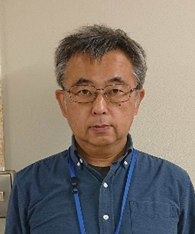
Prof. Masafumi Miwa
Tokushima University, Japan
Professor Dr Masafumi Miwa is worldwide recognised expert UAV engineering and technology. In 1996 he was appointed as Assistant Professor at Wakayama University, Faculty of System Engineering, 2007 Associate Professor at Tokushima University, Institute of Technology and Science, 2016 Associate Professor at Tokushima University, Graduate School of Science and Technology, and 2017 Associate Professor at Tokushima University, Graduate School of Technology, Industrial and Social Sciences.
Professor Miwa started his research on UAV around 2000. After developing autonomous flight controller using GPS with a single-rotor helicopter, he engaged in research on multicopters and various drones. He is conducting research and development on attitude control and autonomous control of various drones incorporating thrust deflection technology, as well as on peripheral technologies required to realize drone transport. In addition, he is verifying the practical application of drone transport by actually performing drone transport.
Title: UAV research using open-source flight controller
In research on unmanned aerial vehicles (UAVs), researchers traditionally developed control systems using original hardware and software, and then evaluated them through experiments. However, with the widespread availability of inexpensive, high-performance microcontrollers, along with the relatively easy production of parts using 3D printers and laser cutters, high-performance DC brushless motors using neodymium magnets, and high-performance lithium polymer batteries, the hobby of building multicopters by hand began to spread around 2006. These hobby-built multicopters, with their simpler structure compared to conventional single-rotor helicopters and simplified control systems, led to the commercialization and widespread adoption of drones.
The origins of the current drone boom can be traced back to DIY multicopters like the MultiWii and ArduCopter, which combined the Ardino microcontroller with sensors from the Wii game console. These technologies fortunately developed as a result of a combination of factors: the availability of inexpensive, high-performance components, a free and user-friendly program development environment, and the exchange of opinions and reviews via the internet. Open-source flight controllers such as ArduPilot, PX4Autopilot, and BetaFlight, which originated from these, are now widely used. Because their source code is publicly available, customization, including adding functions to suit specific purposes, is possible. ArduPilot, in particular, supports the script language “lua”, allowing for the addition and modification of functions without altering the source code. Our research group has been developing and researching various unique unmanned aerial vehicles using ArduPilot since around 2011.
This presentation will introduce several drones we have developed, illustrating examples using our original control systems and examples using open-source flight controllers.
In addition, I will report on methods and advantages of customization based on open-source controllers.